The mosquito that ruins a Henrico backyard in July is usually the Asian tiger mosquito — a black-and-white, daytime biter that breeds in containers rather than swamps. It flies a short distance, often only a hundred…
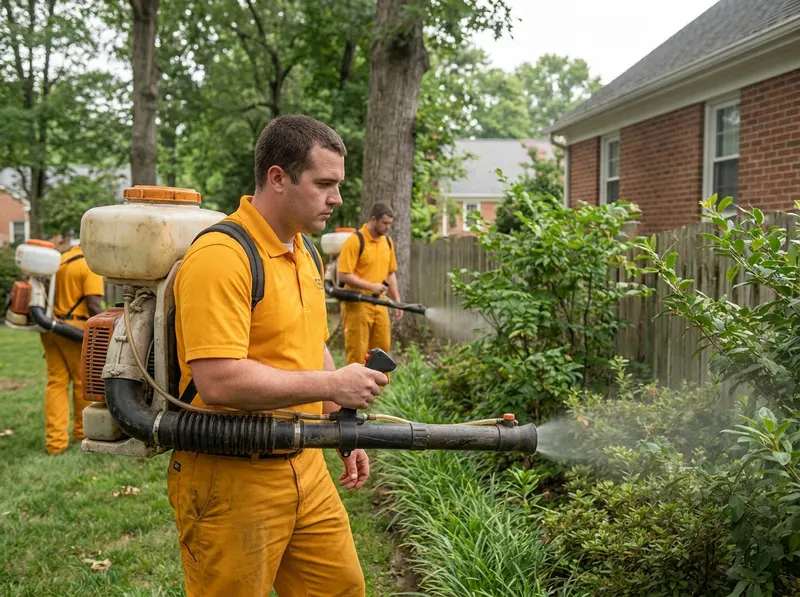
The mosquito that ruins a Henrico backyard in July is usually the Asian tiger mosquito — a black-and-white, daytime biter that breeds in containers rather than swamps. It flies a short distance, often only a hundred yards or so, which is why treatment works: the mosquitoes biting you on the patio in Tuckahoe or Three Chopt were very likely born in your own yard or the one next door. On inspection we find them in tarp folds, corrugated downspout extensions, plant saucers, clogged gutters on older Lakeside homes, kids' wading pools, wheelbarrows, boat covers, and the base of birdbaths. Any container holding water for more than about a week can produce mosquitoes. That is the reason a program leads with source reduction and only then applies product — spraying a yard while five buckets keep refilling is money spent on a problem that restarts in seven days.
Henrico geography changes the workload noticeably. In Varina and out toward Osborne Boat Landing, the James River floodplain, drainage ditches, and low wet woods keep a steady background population coming in from off-property, so those yards benefit most from tight visit intervals and a treated perimeter along the woodline. Flat lots around Highland Springs and Sandston near Richmond International Airport hold water in roadside ditches and shallow yard swales after a thunderstorm. Newer subdivisions in Short Pump, Wyndham, and Innsbrook come with stormwater retention ponds and irrigation systems — the ponds themselves often carry fish and predators, but soggy mulch beds and misdirected sprinkler heads create the wet edges mosquitoes rest in. Shaded, mature-canopy lots in Glen Allen and Lakeside are the classic harborage yards: cool, humid, dense ivy and azalea beds where adults sit out the middle of the day. Anyone who has walked the wetland edges at Dorey Park or the pond trails at Deep Run Park in August knows what unmanaged mosquito habitat feels like — the goal is to keep your yard from reading that way to a mosquito.
Decide between the two options this way. A single-visit treatment fits a fixed date — a graduation party, a wedding in the backyard, an outdoor family dinner — and knocks down the adults present, with useful relief typically measured in days to a couple of weeks depending on rainfall. A recurring program fits households that want to use the yard all season: kids on a trampoline, a dog outside, evenings on the deck. The trade-off is honest and worth stating plainly. One visit is cheaper and temporary. A program costs more across the summer but keeps pressure low through the breeding cycle, since a mosquito can go from egg to biting adult in roughly a week of Henrico heat. Neither option is a guarantee of a mosquito-free yard, because adults fly in from neighboring properties and public drainage.
On safety and scope: applications go on resting surfaces — lower shrub foliage, fence lines, deck framing, woodline edges — not on vegetable gardens, and we keep product off open blooms to reduce exposure to pollinators. Tell us where the raised beds, fish pond, beehive, chicken run, and pet water bowls are, and we route around them. Re-entry is after the treated foliage is dry. Pricing is by lot size and vegetation, quoted before work starts, and there is no charge for the initial walkthrough. Find the entry — in mosquito work, that means finding the water — treat it, and keep the yard usable.
Every job gets a firm, written price after a free on-site visit.
Tell us about your mosquito control program job in Henrico and we'll send a clear, written quote — usually the same day.
 Pestoryx Pest Control