Mice and rats do not wander in at random; they follow a gap. In the brick ranches around Lakeside and Highland Springs, the usual openings are crawlspace vents with rusted or missing screen, the gap where the water…
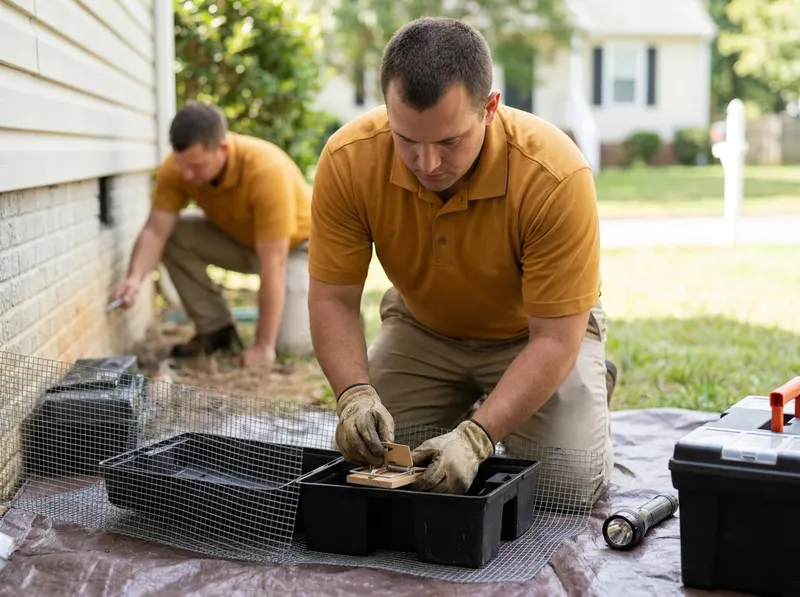
Mice and rats do not wander in at random; they follow a gap. In the brick ranches around Lakeside and Highland Springs, the usual openings are crawlspace vents with rusted or missing screen, the gap where the water line or gas line passes through the block, and the corner where a wooden sill has softened. Newer construction in Short Pump, Wyndham, and Three Chopt fails differently — garage door bottom seals that have curled at the ends, unsealed HVAC line-set penetrations, and dryer vent flaps propped open by lint. In Varina and out toward Sandston, field mice move in from open ground and outbuildings, and the shed or detached garage is often the reservoir feeding the house. The inspection is the part that decides whether the problem ends. We walk the foundation, the crawlspace, the attic, and the utility penetrations, and you get told which specific openings matter.
Timing follows a calendar you can predict here. The first cold nights of October and November push rodents indoors across Henrico County, which is why the phone rings about attic scratching in Glen Allen and Tuckahoe long before anyone sees a mouse. Mature oak and poplar canopy in Tuckahoe and near Deep Run Park puts limbs against roof edges, giving rodents a route to soffit and gable gaps well above ground level. Small commercial spaces and restaurants in the Innsbrook office corridor deal with a different animal — Norway rats working dumpster pads, door sweeps, and floor drains — and that job is priced by the structure and the number of doors, not by square footage of lawn.
Here is the honest trade-off between the two approaches. Trapping alone is the right call when the entry is already sealed, when a single mouse came in through a propped door, or when you need the animals out of a kitchen this week and sealing has to wait for a contractor. Exclusion — physically closing the gaps with hardware cloth, sheet metal, and sealant — is what keeps them out, and it costs more up front than a bag of bait. Skip it and you buy trapping again next fall. On safety: traps are mechanical and placed out of reach of children and pets, in crawlspaces, attic voids, and behind appliances, and if rodenticide is discussed at all it is in tamper-resistant exterior stations away from vegetable beds — tell us about kids, dogs, cats, chickens, and gardens before anything is set.
Store-bought snap traps do catch mice. What they don't do is tell you the population is coming from a 1-inch gap behind the crawlspace access door, and they don't reach the void above your kitchen soffit. No annual contract is required to have rodent work done, and the number of return visits a job needs is stated plainly before we start rather than discovered later. Dead-animal odor in a wall, insulation fouled with droppings, or a crawlspace you can't get into yourself — mention it on the call so the right time and materials are scheduled for your address. Find the entry. Seal it. Stay gone.
Every job gets a firm, written price after a free on-site visit.
Tell us about your rodent control and trapping job in Henrico and we'll send a clear, written quote — usually the same day.
 Pestoryx Pest Control